Square foot measurements play a pivotal role in various aspects of real estate, construction, and interior design. From determining property values to optimizing space layouts, understanding square footage is essential for anyone involved in these industries. Let’s delve into the world of square foot and unravel its significance in our everyday lives.
Definition
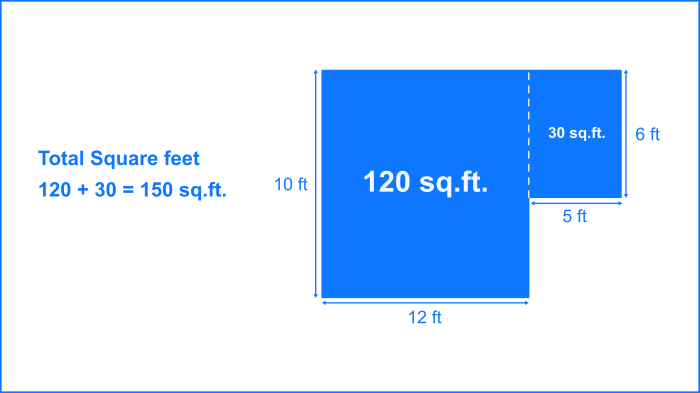
A square foot is a unit of area measurement equal to a square that is one foot on each side. It is commonly used in the real estate and construction industries to measure the size of rooms, houses, buildings, and land.
Common Uses in Real Estate and Construction
In real estate, square footage is used to determine the size and value of a property. For example, a typical one-bedroom apartment may range from 500 to 800 square feet, while a three-bedroom house can be anywhere from 1,500 to 2,500 square feet.
In construction, square footage is essential for estimating materials needed for flooring, walls, and roofing. It also helps builders plan the layout of rooms and design the overall structure of a building.
- Studio Apartment: 300-500 square feet
- Two-Bedroom Apartment: 800-1,200 square feet
- Single-Family Home: 1,500-2,500 square feet
- Commercial Office Space: 1,000-10,000 square feet
Calculations
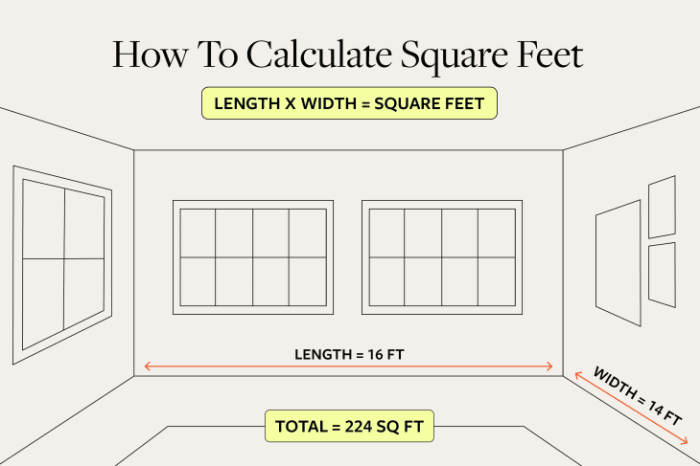
When it comes to calculating square footage, it’s essential to understand the process for both rectangular areas and irregular shapes. Additionally, knowing how to convert square feet to square meters can be useful in various situations.
Rectangular Areas
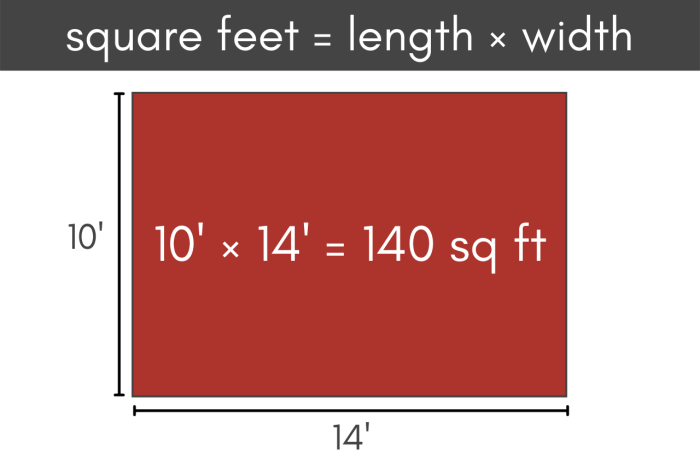
To calculate the square footage of a rectangular area, simply multiply the length by the width. The formula can be represented as:
Area = Length x Width
Irregular Shapes
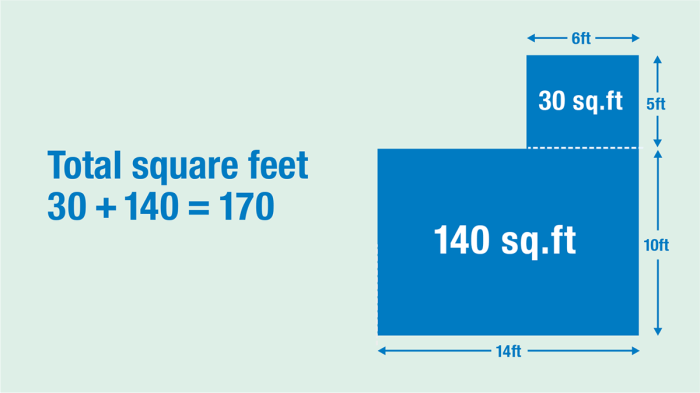
Calculating the square footage of irregular shapes can be a bit more complex. One way to do this is by dividing the shape into smaller, more manageable sections, calculating the area of each section, and then summing them up to get the total square footage.
Converting Square Feet to Square Meters
To convert square feet to square meters, you can use the following formula:
1 square foot = 0.092903 square meters
Simply multiply the square footage by 0.092903 to get the equivalent area in square meters.
Importance in Real Estate
In the realm of real estate, square footage plays a crucial role in determining the value of a property, influencing property taxes, and setting rental prices.
Impact on Property Value
When it comes to property value, square footage is a major factor that potential buyers consider. Generally, larger properties with more square footage tend to have higher market values compared to smaller properties. This is because more square footage typically means more living space, amenities, and potential for customization, which are attractive features for buyers looking for a spacious home.
Influence on Property Taxes
The square footage of a property directly affects the amount of property taxes that homeowners have to pay. Local governments use the square footage of a property as one of the key factors in determining property tax assessments. Generally, the larger the property, the higher the property tax bill, as more square footage usually means a higher assessed value for tax purposes.
Role in Rental Prices
For rental properties, square footage plays a significant role in setting rental prices. Landlords often price their rental units based on the size of the property, with larger units commanding higher rents compared to smaller units. Tenants are willing to pay more for additional square footage as it usually means more living space and amenities.
Additionally, in competitive rental markets, properties with more square footage can stand out and attract tenants willing to pay a premium for extra space.
Interior Design and Space Planning
When dealing with small square footage areas, it is crucial to carefully plan and design the interior space to maximize functionality and aesthetics. Here are some tips on how to make the most out of limited space:
Maximizing Space in a Small Area
- Utilize multifunctional furniture pieces such as storage ottomans or beds with built-in drawers to maximize storage space.
- Opt for light and neutral colors to create an illusion of a larger space.
- Use mirrors to reflect light and create an open feeling in the room.
- Keep the space clutter-free by incorporating smart storage solutions like floating shelves or wall-mounted cabinets.
Furniture Placement in Relation to Square Footage
In a room with limited square footage, the size and placement of furniture play a crucial role in determining the flow and functionality of the space. It is important to:
- Choose appropriately sized furniture that fits the scale of the room.
- Avoid overcrowding the space with too much furniture, opt for pieces that serve a purpose and enhance the overall design.
- Consider the traffic flow and ensure there is enough space to move around comfortably.
Open Floor Plans and Square Footage Utilization
Open floor plans have become increasingly popular as they create a sense of spaciousness and allow for better flow between different areas of the home. When designing with an open floor plan, consider:
- Using area rugs to define separate zones within the open space.
- Utilizing furniture placement to create distinct living, dining, and kitchen areas without the need for walls.
- Maximizing natural light and views to enhance the feeling of openness and connectivity in the space.
Final Summary
Exploring the intricacies of square foot has shed light on its vital importance in our built environment. Whether it’s maximizing living space or evaluating property values, the impact of square foot measurements is undeniable. As you navigate through spaces in the future, remember the role that square footage plays in shaping our surroundings.
Expert Answers
How do you calculate square footage for irregular shapes?
To calculate the square footage of irregular shapes, divide the shape into smaller, regular shapes like rectangles or triangles, calculate the area of each, and then sum them up to get the total square footage.
What is the significance of square footage in rental prices?
Square footage plays a crucial role in determining rental prices as larger spaces usually command higher rents. Tenants are often willing to pay more for properties with more square footage.
Can square footage impact property taxes?
Yes, square footage directly affects property taxes. The larger the square footage of a property, the higher the property taxes are likely to be, as assessed values are often based on total square footage.