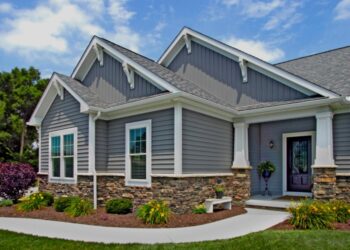
Delving into the realm of siding materials, this introduction sets the stage for a detailed exploration, promising valuable insights and knowledge for the readers.
In the following paragraphs, we will unravel the intricacies of different siding materials, their pros and cons, installation methods, and maintenance tips.
Types of Siding Materials
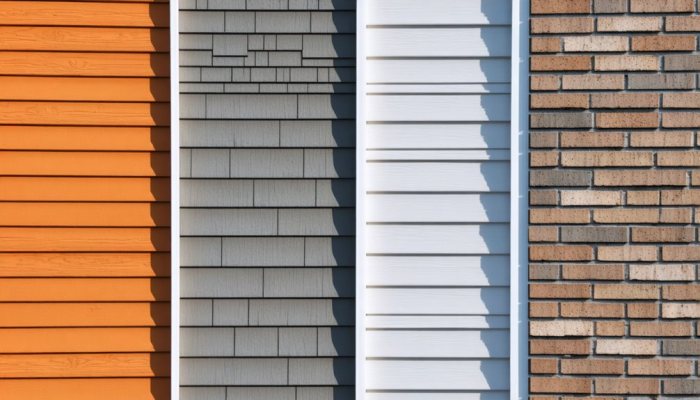
When it comes to choosing siding materials for construction, there are several common options available, each with its own characteristics and benefits.
Vinyl Siding
Vinyl siding is a popular choice due to its affordability, low maintenance requirements, and wide range of colors and styles. It is durable, resistant to rotting and fading, making it a long-lasting option for homeowners.
Fiber Cement Siding
Fiber cement siding is known for its durability and resistance to fire, insects, and rot. It can mimic the look of wood or masonry while requiring minimal maintenance. However, it is heavier and more labor-intensive to install compared to other siding materials.
Wood Siding
Wood siding offers a natural and timeless look that many homeowners appreciate. It can be painted or stained in various colors and provides excellent insulation properties. However, wood siding requires regular maintenance to prevent rot, insects, and moisture damage.
Aluminum Siding
Aluminum siding is lightweight, durable, and resistant to corrosion. It is easy to install and comes in a variety of colors. However, it can dent easily and may require repainting over time to maintain its appearance.
Brick Siding
Brick siding is known for its classic and elegant appearance, offering exceptional durability and low maintenance. It provides excellent insulation and is resistant to fire, rot, and insects. However, it is one of the more expensive siding options and requires professional installation.Overall, the choice of siding material will depend on factors such as budget, maintenance preferences, climate, and desired aesthetic appeal.
Each type of siding material offers unique benefits and considerations for homeowners to weigh before making a decision.
Pros and Cons of Different Siding Materials
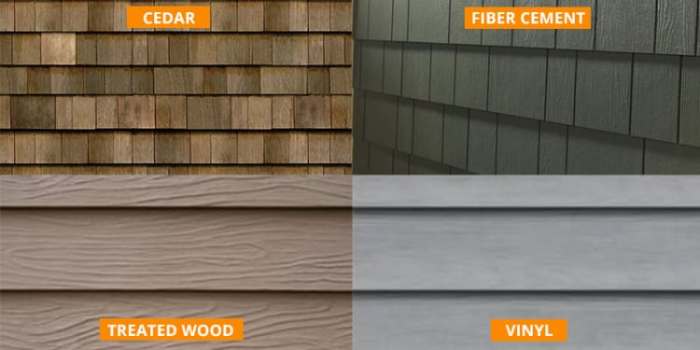
When considering siding materials for your home, it’s important to weigh the advantages and disadvantages of each option to make an informed decision. Below, we will discuss popular siding materials like vinyl, wood, fiber cement, and metal, along with examples of climates where each material performs well, cost implications, and environmental impact.
Vinyl Siding
- Advantages:
- Low maintenance and easy to clean
- Wide range of colors and styles available
- Affordable compared to other materials
- Disadvantages:
- May crack or fade over time
- Not as durable as other materials
- Environmental concerns related to production and disposal
Vinyl siding is well-suited for moderate climates with low humidity and minimal temperature fluctuations. It is a cost-effective option for homeowners looking for a budget-friendly siding material.
Wood Siding
- Advantages:
- Natural and aesthetically pleasing appearance
- Durable and long-lasting with proper maintenance
- Can be painted or stained to change the look
- Disadvantages:
- Requires regular maintenance like painting and sealing
- Prone to rot, pests, and mold if not properly maintained
- Higher initial cost compared to other materials
Wood siding performs well in regions with mild climates and moderate humidity levels. While it offers a timeless and classic look, it can be costly to install and maintain over time.
Fiber Cement Siding
- Advantages:
- Durable and resistant to rot, pests, and fire
- Low maintenance and long lifespan
- Available in various textures resembling wood or stucco
- Disadvantages:
- Higher initial cost compared to vinyl or wood
- Heavier and more difficult to install
- May require repainting over time
Fiber cement siding is ideal for climates with high humidity, extreme temperatures, and frequent exposure to harsh weather conditions. While it may have a higher upfront cost, its durability and low maintenance make it a worthwhile investment in the long run.
Metal Siding
- Advantages:
- Durable and resistant to pests, rot, and fire
- Low maintenance and long-lasting
- Reflects heat, improving energy efficiency
- Disadvantages:
- Potential for dents or scratches
- Limited color options compared to other materials
- May be noisy during heavy rain or hail
Metal siding is suitable for regions with extreme climates, such as areas prone to hurricanes, strong winds, or heavy snowfall. While it offers excellent durability and energy efficiency, it may not be the most aesthetically versatile option.
Installation Methods for Siding Materials
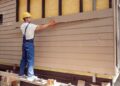
Installing siding materials requires specific steps and techniques to ensure a proper and long-lasting finish for your home’s exterior. Let’s explore the installation methods for different types of siding materials.
Installing Vinyl Siding
Vinyl siding is a popular choice due to its durability and low maintenance requirements. Here are the steps involved in installing vinyl siding:
- Clean the exterior surface of your home thoroughly to remove any dirt or debris.
- Begin by installing a starter strip at the bottom of the wall to secure the first row of siding.
- Install the corner posts and J-channels to provide a finished look and secure the siding panels.
- Overlap each siding panel correctly to allow for expansion and contraction due to temperature changes.
- Finish the installation with trim pieces around doors, windows, and corners for a polished look.
Comparing Wood and Fiber Cement Siding Installation
Wood and fiber cement siding offer a natural and classic look to your home. Here is a comparison of their installation processes:
| Wood Siding | Fiber Cement Siding |
|---|---|
| Requires priming and painting before installation. | Comes pre-finished, reducing installation time. |
| Needs regular maintenance, such as staining or painting. | Low maintenance, only requiring occasional repainting. |
| Installation involves nailing each board individually. | Installation involves overlapping panels and securing with nails or screws. |
Best Practices for Installing Metal Siding
Metal siding is known for its durability and weather resistance. Here are some best practices for installing metal siding:
- Ensure the surface is properly prepared and any existing siding is removed.
- Use a level to ensure straight and even placement of metal panels.
- Overlap panels according to manufacturer’s instructions to prevent water infiltration.
- Secure panels with screws or nails, making sure to leave room for expansion and contraction.
- Finish the installation with trim pieces and caulk to seal any gaps and provide a clean look.
Maintenance and Care Tips for Siding Materials
Proper maintenance is essential for ensuring the longevity and aesthetic appeal of your siding. Here are some tips to help you care for different types of siding materials:
Maintaining Vinyl Siding
- Clean your vinyl siding regularly with a mixture of water and mild detergent to remove dirt and grime.
- Avoid using harsh chemicals or abrasive tools that can damage the surface of the vinyl.
- Inspect for any cracks, holes, or damage, and repair them promptly to prevent moisture from seeping in.
- Consider applying a protective wax coating to keep your vinyl siding looking new and vibrant.
Preventing Rot and Decay in Wood Siding
- Inspect your wood siding annually for signs of rot, decay, or water damage.
- Ensure proper ventilation and drainage around your wood siding to prevent moisture buildup.
- Apply a quality wood preservative or water repellent to protect your wood siding from the elements.
- Regularly repaint or stain your wood siding to maintain its protective finish and enhance its durability.
Importance of Repainting Fiber Cement Siding
- Repainting fiber cement siding every 5-10 years can help maintain its color and protect it from the elements.
- Clean your fiber cement siding before repainting to remove dirt, dust, and debris that can affect the paint adhesion.
- Use high-quality acrylic paint or fiber cement paint specifically designed for this type of siding for best results.
- Inspect for any chipping, peeling, or fading paint, and touch up or repaint those areas as needed.
Maintaining the Finish of Metal Siding
- Clean your metal siding with a mixture of water and mild detergent to remove dirt, stains, and pollutants.
- Inspect for any scratches, dents, or corrosion, and repair or replace damaged sections promptly.
- Apply a protective coating or sealant to prevent rust and corrosion, especially in high-moisture areas.
- Avoid using abrasive materials or harsh chemicals that can damage the finish of your metal siding.
Final Conclusion
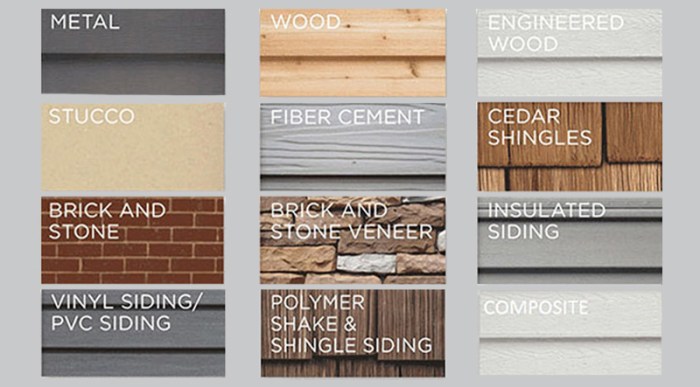
Concluding our discussion on siding materials, we have covered a wide array of information to equip you with the necessary knowledge for making informed decisions about your property’s exterior.
Popular Questions
What are the best siding materials for extreme climates?
Generally, fiber cement and metal siding are more suitable for extreme climates due to their durability and resistance to harsh weather conditions.
How often should I repaint fiber cement siding?
It is recommended to repaint fiber cement siding every 7-15 years to maintain its appearance and protect it from the elements.
Can vinyl siding be painted?
Yes, vinyl siding can be painted, but it is essential to use the appropriate type of paint and follow proper preparation methods for long-lasting results.