Delving into the realm of asbestos siding replacement, this introductory passage sets the stage for an informative journey that combines expertise and originality, promising an enriching read for all.
The following paragraph will delve into the specifics of the topic, providing a detailed overview.
Overview of Asbestos Siding Replacement
Asbestos siding, commonly used in older homes, poses serious health risks due to the release of asbestos fibers into the air when disturbed. These fibers are known to cause lung cancer, mesothelioma, and other respiratory issues when inhaled.
Dangers of Asbestos Siding
- Exposure to asbestos fibers can lead to serious health conditions such as lung cancer and mesothelioma.
- Asbestos siding becomes brittle over time, increasing the risk of fiber release.
- Disturbing asbestos siding during repairs or renovations can release harmful fibers into the air.
Reasons for Replacing Asbestos Siding
- Protect the health and safety of occupants by eliminating the risk of asbestos exposure.
- Prevent future costly abatement procedures required by law if the siding deteriorates further.
- Enhance the overall value and curb appeal of the property by replacing outdated and hazardous siding.
Benefits of Replacing Asbestos Siding
- Eliminates the health risks associated with asbestos exposure for occupants and maintenance workers.
- Improves the energy efficiency of the home by installing modern, insulated siding materials.
- Enhances the aesthetic appeal of the property with a fresh, updated look.
Identifying Asbestos Siding
Identifying asbestos siding in homes is crucial for ensuring the safety of occupants and workers during renovations or repairs. Asbestos exposure can lead to serious health risks, including lung cancer and mesothelioma. It is important to be able to recognize the appearance and characteristics of asbestos siding to take the necessary precautions.
Characteristics of Asbestos Siding
Asbestos siding was commonly used in homes built before the 1980s and can be found in various forms, such as shingles, sheets, or panels. It has a distinctive appearance, often resembling cement or wood siding. Asbestos siding is known for its durability, fire resistance, and insulating properties.
However, due to the health risks associated with asbestos fibers, it is important to handle it with caution.
- Asbestos siding may have a textured surface that resembles wood grain or a smooth, flat finish.
- It is typically grey or off-white in color, but it can also be found in other shades such as brown or green.
- When tapped, asbestos siding may produce a hollow sound due to its composition.
- Asbestos fibers are tightly bound within the siding material, making it difficult to distinguish visually from non-asbestos products.
Asbestos Siding Removal Process
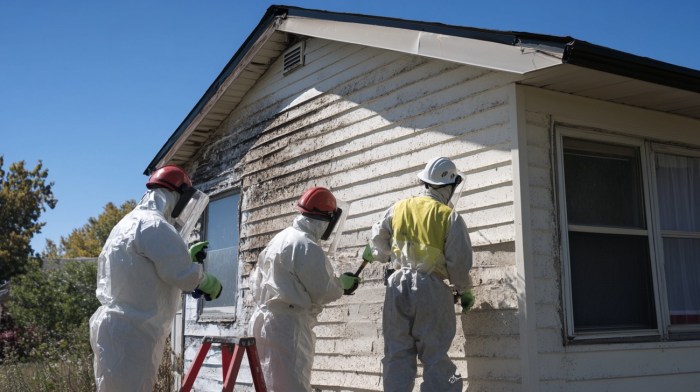
When it comes to asbestos siding removal, it is crucial to follow a strict process to ensure the safety of everyone involved. Hiring professionals for this task is highly recommended due to the health risks associated with asbestos exposure. Additionally, proper disposal of asbestos-containing materials is essential to prevent further contamination.
Steps for Safe Asbestos Siding Removal
- 1. Inspection: Before any removal work begins, a thorough inspection should be conducted to determine the extent of asbestos present in the siding.
- 2. Preparation: The area surrounding the siding should be sealed off to prevent asbestos fibers from spreading. Workers should wear protective gear such as masks and coveralls.
- 3. Wetting: Asbestos siding should be wetted down before removal to minimize the release of fibers into the air.
- 4. Removal: Carefully remove the asbestos siding in whole pieces to prevent breakage and fiber release. Avoid using power tools that can generate dust.
- 5. Cleaning: Thoroughly clean the work area and dispose of all materials properly to prevent any lingering asbestos contamination.
Importance of Hiring Professionals
Removing asbestos siding requires specialized training and equipment to ensure the safety of both workers and occupants of the property. Professionals know how to handle asbestos-containing materials safely and follow strict guidelines to prevent exposure.
Disposal Regulations for Asbestos-Containing Materials
Disposal of asbestos-containing materials must comply with specific regulations to protect the environment and public health. These regulations typically involve sealing the waste in approved containers and transporting it to designated disposal sites. It is crucial to follow these regulations to prevent legal consequences and environmental contamination.
Replacement Options for Asbestos Siding
When it comes to replacing asbestos siding, there are several alternative materials that you can consider. Each option comes with its own set of advantages and disadvantages, so it’s essential to weigh them carefully before making a decision. In addition to the material itself, cost considerations and compatibility with your home’s aesthetic should also be taken into account.
Comparing Different Siding Materials
- Vinyl Siding: Vinyl siding is a popular choice due to its affordability and low maintenance requirements. It comes in a variety of colors and styles, making it versatile for different home designs.
- Fiber Cement Siding: Fiber cement siding is known for its durability and resistance to rot, fire, and pests. While it may be more expensive upfront, it typically has a longer lifespan than other materials.
- Wood Siding: Wood siding offers a natural, classic look that can enhance the curb appeal of your home. However, it requires more maintenance in terms of painting and staining to prevent rot and insect damage.
Cost Implications of Replacing Asbestos Siding
Replacing asbestos siding can be a significant investment, but the long-term benefits often outweigh the initial cost. The overall cost will depend on factors such as the size of your home, the chosen replacement material, and whether you hire professionals for installation.
It’s important to get multiple quotes and compare prices to ensure you’re getting a fair deal.
Tips for Choosing the Right Replacement Siding
- Consider the climate in your area and choose a siding material that can withstand the weather conditions.
- Think about the maintenance requirements of each material and how much time and effort you are willing to invest in upkeep.
- Look at samples of different siding materials to see how they will complement your home’s architecture and style.
DIY vs. Professional Asbestos Siding Replacement
When it comes to asbestos siding replacement, homeowners often face the decision of whether to tackle the project themselves or hire professionals. Both options come with their own set of risks and benefits, so it’s crucial to weigh these factors before making a decision.
Risks of DIY Asbestos Siding Removal
- Exposure to Asbestos Fibers: DIY removal can lead to the release of harmful asbestos fibers into the air, posing serious health risks to you and your family.
- Legal Compliance Issues: Improper disposal of asbestos-containing materials can result in legal consequences, as there are strict regulations governing the handling and disposal of asbestos.
- Lack of Expertise: Removing asbestos siding requires specialized knowledge and equipment to ensure the job is done safely and effectively.
Benefits of Hiring Professionals for Replacement
- Expertise and Experience: Professional asbestos removal companies have the training and experience to safely handle asbestos-containing materials.
- Compliance with Regulations: Professionals are well-versed in asbestos regulations and will ensure that all proper procedures are followed for disposal.
- Time and Cost Efficiency: While hiring professionals may come at a higher cost upfront, it can save you time and money in the long run by avoiding potential health risks and legal issues.
Cost Analysis of DIY vs. Professional Replacement
While DIY asbestos siding removal may seem like a cost-effective option initially, the risks and potential hazards associated with improper removal can result in higher costs for remediation and legal fees in the future. On the other hand, hiring professionals for asbestos siding replacement may have a higher upfront cost but can provide peace of mind knowing that the job is done safely and in compliance with regulations.
Environmental Impact of Asbestos Siding Replacement
When it comes to replacing asbestos siding, the environmental impact can be significant. By removing asbestos-containing materials and opting for eco-friendly alternatives, you can contribute to a healthier environment for yourself and future generations.Proper disposal methods are crucial in minimizing the environmental harm caused by asbestos siding removal.
Improper disposal can lead to the release of harmful asbestos fibers into the air, posing a risk to human health and the environment. By following regulations and guidelines for asbestos disposal, you can ensure that asbestos waste is safely contained and disposed of, reducing the risk of contamination.
Benefits of Eco-Friendly Siding Options
- Choose sustainable materials: Opt for siding materials that are renewable, recyclable, or made from post-consumer waste. This reduces the demand for virgin materials and minimizes environmental impact.
- Energy efficiency: Select siding options that provide better insulation, reducing energy consumption for heating and cooling. This can lead to lower energy bills and decreased carbon emissions.
- Low maintenance: Eco-friendly siding materials often require less maintenance and are more durable, reducing the need for frequent replacements and minimizing waste.
Last Recap
Wrapping up our discussion on asbestos siding replacement, this concluding segment encapsulates the key points discussed, leaving readers with a lasting impression of the importance of this process.
Query Resolution
How dangerous is asbestos siding?
Asbestos siding poses serious health risks as the fibers can be inhaled, leading to respiratory issues and even cancer.
Is it necessary to hire professionals for asbestos siding removal?
Yes, it is crucial to hire professionals as they have the expertise and equipment to safely remove asbestos siding without causing harm.
What are the benefits of replacing asbestos siding?
Replacing asbestos siding improves indoor air quality, reduces health risks, and enhances the overall aesthetic of the property.
What are some eco-friendly siding options for replacement?
Fiber cement, wood, and vinyl are popular eco-friendly alternatives to asbestos siding replacement.